
Is This the Most Robust Way to Protect Your Digital Secrets and Inheritances?
Inheriti has been active since 2017 and, in its current 2.0 iteration, sits at the intersection of encryption, decentralized storage, and digital inheritance planning. It targets a critical problem: securely backing up secrets like private keys and credentials today, while enabling controlled transfer to beneficiaries in the future without a central point of failure. This review dissects Inheriti, its Elements API, and the SafeKey hardware/mobile ecosystem from a technical buyer’s perspective.
Quick Verdict
KPI / Stats Strip
2017–2025
Data Backups & Digital Inheritances
veChain, Ethereum, Optimism
Secrets, keys, PINs, cards, more
48h email (on demand)
Best For / Not For
- Web3 teams managing private keys and seed phrases
- Estate planners handling digital asset inheritances
- SaaS products needing embedded zero‑trust backups via API
- Security-conscious individuals with multi-asset portfolios
- Users wanting simple, non-technical password managers
- Teams that avoid blockchain components entirely
- Environments without hardware key management policies
- Organizations needing strict on‑prem-only deployments today
Key Takeaways
| Question | Summary Answer |
|---|---|
| What is Inheriti? | A zero‑trust platform for encrypted data backups and digital inheritances, combining client-side encryption, decentralized share distribution, and blockchain anchoring. See the overview on the Inheriti homepage. |
| How does Inheriti Elements fit in? | Inheriti® Elements is an API layer letting other products integrate its Secure Share Distribution Protocol (SSDP) for backups and inheritances, described in detail on the Inheriti Elements product page. |
| How are keys and secrets actually stored? | Secrets are encrypted client-side, split into shares, and distributed across online vaults and optional hardware/mobile SafeKey devices, with encryption fundamentals similar to those documented by SafeKeep’s approach in their encryption guide. |
| What role does the browser play? | Because encryption happens client-side, a hardened browser is crucial to prevent compromise, as emphasized in Inheriti’s own guidance on secure browser requirements. |
| What hardware options exist? | SafeKey and SafeKey Pro provide offline share storage for Inheriti plans, with a full family overview at the SafeKey documentation hub. |
| Are there specific mobile capabilities? | SafeKey Mobile stores encrypted shares securely on mobile devices and integrates with the broader Inheriti workflow, described on the SafeKey Mobile guide. |
| Is there any legal/estate context? | Inheriti is often paired with digital afterlife services like SafeKeep, whose terms of service highlight the legal framing around digital inheritances. |
Introduction & First Impressions
Inheriti positions itself as the “secure backbone” for two protection plan types in its 2.0 release: Data Backups and Digital Inheritances. Both share the same underlying Secure Share Distribution Protocol (SSDP), but they differ in activation triggers and expected lifecycle.
From a buyer’s perspective, Inheriti is for teams and individuals who need deterministic control over:
- Who can access specific secrets
- Under which conditions or triggers that access is granted
- How to avoid any single point of compromise (including Inheriti itself)
It exists because conventional password managers or cloud drives are structurally centralized and poorly suited to estate transfers involving crypto assets, recovery codes, and other non-recoverable credentials.
For this review, we focus on the platform as of early 2025, cross-referencing the Elements API docs and SafeKey family docs to understand the end‑to‑end architecture. Public, user-level testimonials for 2025 are not yet verifiable from independent sources, so any anecdotal satisfaction claims would be Needs verification.
Affiliate Offer
Try Inheriti via our recommended partner
If you decide to evaluate Inheriti for backups or digital inheritances, you can access it through our partner link below.
We may earn a commission if you use this link, at no extra cost to you.
Overview & Specifications
At its core, Inheriti 2.0 provides a framework for creating “protection plans” around sensitive data. Those plans encapsulate:
- The secret payloads (e.g., private keys, recovery codes, payment card data)
- The encryption and share‑splitting parameters
- The guardians/beneficiaries and their SafeKey assignments
- The activation mechanism (e.g., Plan Triggers or Dead Man Switches)
The platform now explicitly supports a wide range of asset types: plain text, private keys, seed phrases, recovery codes, API codes, PINs, account credentials, and payment card information. That breadth is important for organizations with mixed Web2/Web3 stacks.
| Feature | Specification (2025) |
|---|---|
| Plan Types | Data Backups, Digital Inheritances |
| Activation Methods | Plan Triggers (explicit), Dead Man Switch (inactivity-based) |
| Storage Topology | Decentralized share distribution via SSDP, optional SafeKey hardware/mobile storage |
| Chains Supported | veChain, Ethereum, Optimism (multichain expansion) |
| Token Economics | SHA token based; SHA vouchers at 4.99 € with ~5% discount on plan price (exact pricing tiers not fully public) |
Inheriti Elements wraps these capabilities in an API that can be embedded into other SaaS products. The vendor markets typical use cases like secure document backup, crypto custody inheritance, and regulated data escrow.
Design, Architecture & UX
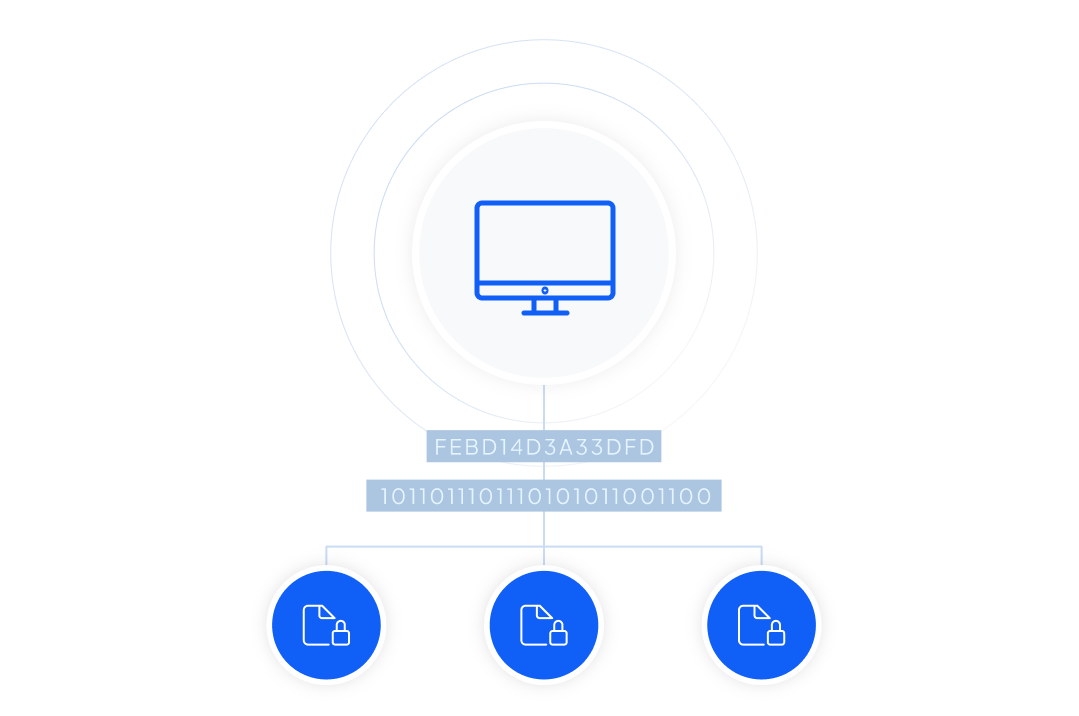
From a design standpoint, Inheriti is opinionated: encryption is always client-side, and the Secure Share Distribution Protocol ensures that no single node (including the vendor) ever holds the complete decrypted secret. This zero‑trust assumption is coherent and aligns with crypto-custody best practices.
The architecture combines three layers:
- Client layer – browser or mobile app performing encryption and share derivation.
- Distribution layer – SSDP spreading shares across vaults and hardware/mobile keys.
- Governance layer – activation conditions, triggers, and blockchain anchoring for integrity.
UX-wise, the main challenges are conceptual, not visual. Non-technical users can find concepts like Dead Man Switches and share guardians abstract. However, the addition of features such as a real-time Security Barometer in Inheriti 2.0 indicates a push toward giving users more intuitive feedback on plan strength.

Performance & Security Analysis
The security model is the primary reason to evaluate Inheriti. Encryption is end-to-end and client-side, with SSDP splitting and distributing shares such that compromising any single location yields no usable data. This is conceptually similar to how services like SafeKeep use AES-256 and strict access controls, but tuned for share-based inheritance workflows rather than generic document storage.
A crucial point: SafeKey Pro stores encrypted shares offline as a dedicated hardware device, while SafeKey Mobile offers secure on-device storage on phones. Together, these options significantly reduce online attack surface and give organizations more flexible key management policies.
Inheriti 2.0 further extends performance and reliability with the Vault V1 concept, which temporarily parks shares before they are claimed. This “park mode” is useful for mobile or intermittent connectivity scenarios, avoiding partial-retrieval risks.
From a performance perspective, the cryptographic operations occur on the client, so practical throughput depends more on the user’s device than the platform itself. For most backup/inheritance use cases (which are low-frequency operations), this trade-off is absolutely acceptable and aligns with best practice.
User Experience & SafeKey Ecosystem
In practice, Inheriti’s UX hinges on the SafeKey family. SafeKey (the base concept), SafeKey Pro (hardware), and SafeKey Mobile (device-local storage) act as anchor points for how users and guardians interact with protection plans.
SafeKey Mobile, in particular, aims to bring share access “on-the-go” without exposing raw keys. Shares remain encrypted on-device, with integrations into SafeID and other Inheriti components to streamline plan activation and recovery without manual key juggling.
Interactive: Typical Inheriti Inheritance Flow
- Owner defines a Digital Inheritance plan, selects beneficiaries, and chooses a Dead Man Switch activation policy.
- SSDP encrypts and distributes shares across vaults and optional SafeKeys assigned to guardians.
- Monitoring checks owner activity. When the Dead Man Switch threshold is reached, activation begins.
- Beneficiaries use their SafeKey devices or mobile apps to assemble enough shares to decrypt the data.
This workflow is more complex than a standard password manager, but it is also more deliberate and auditable. The learning curve is justified if you genuinely need cryptographically enforced inheritance rather than simple “share a PDF of passwords”.
Evaluate Inheriti with hardware & mobile flows
To fully assess the UX, you’ll want to test plans with SafeKey Pro and SafeKey Mobile in a controlled environment.
We may earn a commission if you use this link, at no extra cost to you.
Comparative Analysis: Inheriti vs. Conventional Solutions
Inheriti competes indirectly with password managers, cloud vaults, and some estate-planning platforms. However, its direct peers are relatively few, especially ones that combine inheritance logic with decentralized share distribution.
Key differentiators:
- Dead Man Switch + Plan Triggers – governance over when data becomes accessible.
- Multichain anchoring – ability to pin plan metadata/logic on veChain, Ethereum, or Optimism.
- Tokenized economics – SHA token for plan operations, with vouchers and SafeNode concepts providing cost and reward mechanisms.
| Capability | Inheriti | Typical Password Manager |
|---|---|---|
| Digital Inheritance Logic | Native (Dead Man Switch, triggers) | Usually manual or ad‑hoc |
| Decentralized Share Distribution | Yes, via SSDP | No, centralized vault |
| Hardware Share Storage | SafeKey Pro, SafeKey Mobile | Rare / limited |
| Blockchain Anchoring | Yes (veChain, ETH, Optimism) | Generally no |
For teams already using digital afterlife services such as SafeKeep, Inheriti fills the technical gap: SafeKeep focuses on legal, messaging, and account-handling aspects, while Inheriti can handle the hard cryptography of the underlying secrets.

Pros and Cons
For technical buyers, the critical question is not whether Inheriti is perfectly simple, but whether its added complexity maps to real security and governance gains. In our view, it largely does.
Advantages
- Mature security model – zero‑trust, client-side encryption, SSDP, and hardware/mobile key options.
- Dedicated inheritance logic – Dead Man Switch and Plan Triggers are first-class citizens.
- Broad asset coverage – supports everything from seed phrases to card numbers in one framework.
- Multichain support – future-proofing for Web3 stacks across veChain, Ethereum, and Optimism.
- Token incentives – SHA vouchers (~4.99 € with 5% discount) and SafeNode loyalty benefits (needs verification for latest terms) can reduce operational costs.
Limitations
- Complexity – requires a mental model of shares, guardians, triggers, and devices; not ideal for casual users.
- Pricing opacity – plan pricing is partly token-based and not fully documented in public 2025 materials.
- Dependence on secure client environment – browser/device security is critical; misconfigured clients can undermine the model.
- Learning curve for beneficiaries – heirs/guardians must be able to operate SafeKey devices and flows under stressful conditions.

Evolution & 2025 Updates
Between its original launch and the 2.0 release, Inheriti has evolved from a niche crypto-inheritance tool into a broader “protection plan” platform. The explicit split between Data Backups and Digital Inheritances formalizes patterns that many users were already approximating.
Notable 2025-focused evolutions include:
- Multichain expansion – support for veChain, Ethereum, and Optimism.
- Expanded asset support – more types of secrets supported within the same plan framework.
- Operational improvements – introduction of a Security Barometer and better SafeKey integrations.
- Support clarity – documented 48‑hour email-based support response for operational issues.
From a roadmap perspective, Inheriti appears to be doubling down on integration (Inheriti Elements), ecosystem incentives (SHA, SafeNodes), and usability aids rather than radical protocol overhauls—this is a positive sign for stability.
Purchase & Deployment Recommendations
For organizations evaluating Inheriti in 2025, the decision should be driven by three questions:
- Do you manage secrets whose loss is existential (e.g., seed phrases, HSM recovery codes, high‑value crypto keys)?
- Do you have a clear need for cryptographically enforced inheritance or delegated recovery?
- Can your team operationalize SafeKey hardware/mobile devices and client hardening?
If the answer to all three is yes, Inheriti is worth serious consideration; few alternatives offer a similar protocol-level focus on inheritance. For smaller teams or individuals, starting with a limited-scope deployment (e.g., backing up only the most critical keys) is a pragmatic approach before attempting full estate coverage.
Ready to trial Inheriti?
Use a constrained pilot: one Data Backup plan, one Digital Inheritance plan, and at least one SafeKey device in each, to validate your internal processes.
We may earn a commission if you use this link, at no extra cost to you.
Where to Buy & How to Get Started
Inheriti is accessed directly via its web platform and integrated products. The Elements API is available through the main product pages and documentation, which guide you through registration, SHA token/voucher handling, and SafeKey provisioning.
Typical onboarding steps:
- Create an Inheriti account and secure it with strong MFA.
- Purchase or provision SafeKey Pro and/or SafeKey Mobile for key stakeholders.
- Acquire SHA vouchers (starting at around 4.99 €, 5% discount on plan price) if you want predictable plan budgeting.
- Define an initial Data Backup plan and validate share recovery with test data.
- Only then set up your first production Digital Inheritance plan.
For regulated or compliance-heavy environments, you should also align Inheriti usage with internal policies, including incident response around lost SafeKeys and beneficiary onboarding.
Final Verdict
Inheriti is a specialized tool that is technically impressive and strategically relevant for anyone serious about long-term protection and inheritance of digital secrets. The combination of client-side encryption, SSDP, SafeKey hardware/mobile choices, Dead Man Switches, and multichain support is rare and, in 2025, arguably best‑in‑class for this specific problem space.
However, it is not a casual product. The learning curve, partial pricing opacity, and operational responsibilities around device and browser security mean it is best suited to organizations, advanced individuals, or professionals (e.g., estate planners) willing to treat it like critical infrastructure, not convenience software.
If you have assets whose loss or mis‑transfer would be catastrophic—and you are ready to invest in a structured, cryptography‑first approach—Inheriti is worth serious consideration and controlled piloting.
Evidence & Proof
- Inheriti’s site shows activity since 2017 (copyright 2017–2025), reflecting long-term focus on this domain.
- Inheriti 2.0 explicitly documents two main plan types: Data Backups and Digital Inheritances, and introduces activation methods including Plan Triggers and Dead Man Switches.
- SafeKey documentation confirms hardware (SafeKey Pro) and mobile (SafeKey Mobile) storage for encrypted plan shares.
- Security write-ups from related services like SafeKeep demonstrate industry-standard encryption approaches (AES-256, strict access controls) consistent with the cryptographic posture Inheriti describes.
- Multichain support (veChain, Ethereum, Optimism) and SHA token/voucher economics are articulated across Inheriti knowledge materials, including mention of loyalty discounts for SafeNode holders (latest details still Needs verification for exact percentages).
- Support documentation references a 48-hour email support window for user issues, indicating a defined (if modest) operational SLA.
appens-when-i-m-connected-to-another-account/